Posts

207 Assignment Julian Barnes The Only Story

Name: - Nanda Chavada Roll No: - 19 Semester: - 4(Batch 2023-25) Enrolment number: - 5108230012 Paper No: - 207 Paper name: Contemporary Literature in English Paper code: - 22414 Topic: Gender, Power, and Vulnerability in Julian Barnes’s The Only Story Submitted to: - Smt. S. B. Gardi Department of English, Maharaja Krishnakumarsinhji Bhavnagar University Date: 17/04/2025 Email Address: nandachavada@gmail.com  Topic Name : Gender, Power, and Vulnerability in Julian Barnes’s The Only Story Table of Contents: Abstract Key Words Introduction  About the Author  About the Novel  Exploration of Love and Memory Power Dynamics in the Relationship  Gender and Social Expectations  Vulnerability in Intimate Relationships Emotional Dependency and Autonomy Conclusion  Work cited  Abstract This paper explores the intricate interplay of gender, power, and vulnerability in Julian Barnes’s novel The Only Story (2018). Through the unconventional and emotionally com...

208 Voicing the Margins: A Perspective on Translation and Literary History in Ganesh Devy’s Thought

Assignment - 4 Title :“Voicing the Margins: A Perspective on Translation and Literary History in Ganesh Devy’s Thought” Personal Details Name:- Nanda Chavada N. Batch:- M.A. Sem 4 (2023-2025) Enrollment Number:-5108230012 E-mail:- nandachavada@gmail.com Roll Number:- 19 Assignment Details Paper name: Comparative Literature & Translation Studies Paper code: 22415 Topic:- “Voicing the Margins: A Perspective on Translation and Literary History in Ganesh Devy’s Thought” Submitted to:- Smt. Sujata Binoy Gardi, Department of English, MKBU, Bhavnagar Date of Submission:- 17/04/2025 Table of Contents: Abstract Key Words Introduction Understanding Translation Studies in the Indian Context Historical Overview of Translation in India Ganesh Devy: Language, Power, and the Subaltern Voice Analysis of the Article: “Translation and Literary History: An Indian View” The Concept of ‘Ghettoization’ in Indian Literature Translation as Resistance: Postcolonial and Indigenous Perspectives Cr...

John Milton

Image
 John Milton, born on December 9, 1608, in London, England, was a prominent figure of the English Renaissance and one of the most influential poets in the English language. His writings, known for their epic scale, deep theological reflections, and masterful command of language, have had a lasting impact on English literature. Milton received a rigorous education, immersing himself in classical studies. He attended St. Paul's School before moving on to Christ's College, Cambridge, where he excelled in literature, languages, and theology. His extensive reading and intellectual curiosity laid the groundwork for his literary pursuits. His most renowned work, Paradise Lost (1667), is an epic poem that narrates the biblical tale of humanity’s fall from grace. With its grand poetic style and profound themes of sin, redemption, and the struggle between good and evil, the poem offers a nuanced portrayal of characters like Satan, Adam, and Eve, encouraging readers to reflect on human...

John Donne

Image
John Donne, born in 1572 in London, England, was a highly influential poet, preacher, and metaphysical poet of the late Renaissance period. His innovative and complex poetry, characterized by its wit, intellect, and exploration of profound themes, has left an indelible mark on English literature. Donne's early life was marked by a mix of privilege and hardship. He was born into a Roman Catholic family during a time of religious turmoil in England, and his family faced persecution for their faith. Donne received a rigorous education in both secular and religious subjects, studying at Oxford University and later at Cambridge. Donne's early poetic works, such as his love poems and elegies, are marked by their intricate wordplay, metaphysical conceits, and exploration of themes such as love, death, and spirituality. His collection of poems, "Songs and Sonnets" (1633), contains some of his most famous and enduring works, including "The Flea," "A Valediction...

B.A. Emily Brontë

Image
Emily Brontë, born on July 30, 1818, in Thornton, Yorkshire, England, was an extraordinary writer and poet of the Victorian period. Though her life was brief, she made a lasting impact on English literature with her only novel, Wuthering Heights , as well as her deeply expressive poetry. Her works are renowned for their emotional intensity, imaginative depth, and exploration of complex human relationships. Brontë was raised in the Yorkshire moors, a landscape that profoundly shaped her literary vision. Alongside her siblings—Charlotte, Anne, and Branwell—she spent much of her childhood engaged in storytelling and creative play. The isolation of the moors and the strong bond within the Brontë family nurtured her artistic development and unique perspective. Published in 1847 under the pen name Ellis Bell, Wuthering Heights is Brontë’s most celebrated work and a landmark in English literature. The novel challenged Victorian literary norms with its dark, passionate narrative, delving in...

B.A. Edmund Spenser

Image
Edmund Spenser, born around 1552 in London, England, is recognized as one of the most influential poets in the English literary tradition. His most renowned work, The Faerie Queene , is an epic poem that holds a significant place in English literature. However, Spenser’s contributions extend far beyond this masterpiece, as he also wrote numerous sonnets, elegies, and other poetic works that highlight his exceptional command of language and vivid imagery. Spenser’s early education at the Merchant Taylors' School in London, followed by his studies at Pembroke College, Cambridge, provided him with a strong background in classical literature and humanist thought. After completing his education, he secured positions under influential noble patrons, such as the Earl of Leicester, which opened doors for him in literary circles and provided him with opportunities to develop his artistic talents. His magnum opus, The Faerie Queene , is an allegorical epic that weaves together themes of ro...

The Significance of the Title “Live Burial”

Image
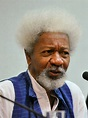
The Significance of the Title “Live Burial” Introduction Wole Soyinka’s poem "Live Burial" is a powerful critique of oppression, political imprisonment, and the silencing of truth. The title itself, "Live Burial" , is highly symbolic. It refers to both literal burial while still alive and the metaphorical burial of one’s voice, freedom, and identity under oppressive regimes. Soyinka, a Nigerian writer and activist, was imprisoned for 27 months during the Nigerian Civil War (1967-1969) for speaking against the government. His experiences deeply influenced his writing, including this poem. Through strong imagery and references to Greek tragedies, historical figures, and political resistance, Soyinka exposes the horrors of being silenced by those in power. About the Author: Wole Soyinka Full Name: Akinwande Oluwole Babatunde Soyinka Born: July 13, 1934, in Abeokuta, Nigeria Achievements: First African to win the Nobel Prize in Literature (1986) Political ac...